Saturday, July 11, 2015

fun playing duck herder

the ducks have pretty much outgrown the brooder and i've been working on getting them used to being outdoors.  i've also been working on getting them used to being walked/herded out to the gardens to work.  runners were developed by breeding ducks selected for an ability to move easily and quickly over fairly long distances on land.  their legs are actually a bit farther back on the body than other ducks which allows for the upright posture and decreases the amount of waddle in their gait.  rice farmers in southeast asia have used them for centuries to eat pests and manure the rice paddies.  each morning the ducks would be walked from the villages to the fields where they would spend the day foraging and then be walked back in the evening.  in addition to moving well on land runners also tend to stick together, like sheep do, when being moved which makes getting everyone where you want them pretty easy.
this morning i walked the ducks out to the orchard garden with me so they could manure and clean the bugs out of some beds i'm preparing for fall planting.  


they're getting more comfortable with being moved around but are still a bit hesitant about going through doorways and gates.  they did pretty well with the greenhouse doors today.  sometimes i walk behind them and steer them a little and sometimes i can get them to just follow me.

here's a short video of them following me from the orchard garden on our way back to the kitchen garden:



Wednesday, July 8, 2015

3 weeks old

the ducklings are about 3 weeks old now and today was their first day out working in the garden.  i've been taking them out of the brooder and into the greenhouse for their baths everyday but today they had their bath in the kitchen garden and got to do a little bug hunting while they were out there.  they were a little nervous at first but they relaxed after a few minutes and had a great time exploring, bug hunting, and bathing.

checking out the big world above


relaxing a bit but keeping close together

after they got acquainted with their new surroundings they decided the water looked pretty good.


i let the ducks hang out in the garden while i mucked out and scrubbed the brooder and then did some watering in the garden.  it was nice listening to them talk to each other and splash around while i worked.

Monday, July 6, 2015

today in pictures

here is some of today in pictures...


it was not a terrible day.

polyculture and why smaller isn't less

32 vegetable beds, 36 fruit trees, artichokes, grapes, blackberries, blueberries, herbs, flowers and eggs.  it works out to around 0.057 acres (not counting aisles/space between trees or animal housing) of our 6 acres in cultivation.  the number doesn't sound like much but there's a lot going on out there. 
if we were only growing one kind of crop on 0.057 acres we probably wouldn't have much to show for it at harvest time.  and since we're growing food for home use it doesn't make sense to only grow one kind of crop.  we like variety in our diet and i'd get bored only growing zucchinis and tomatoes.
polyculture is a very good way to pack a lot of crop diversity and productivity into a small area of cultivation and it also allows for some creative solutions to the challenges of making the most of a small space.

1 of the 15 varieties of squash planted this year

not only do i grow a wide variety of vegetables and fruits but i'll often interplant many different things in a single bed.  the beds in the kitchen garden are a mix of onions, herbs, asparagus, lettuces, greens, beans, strawberries, sunflowers, etc.  there are annuals and perennials happily growing together.  

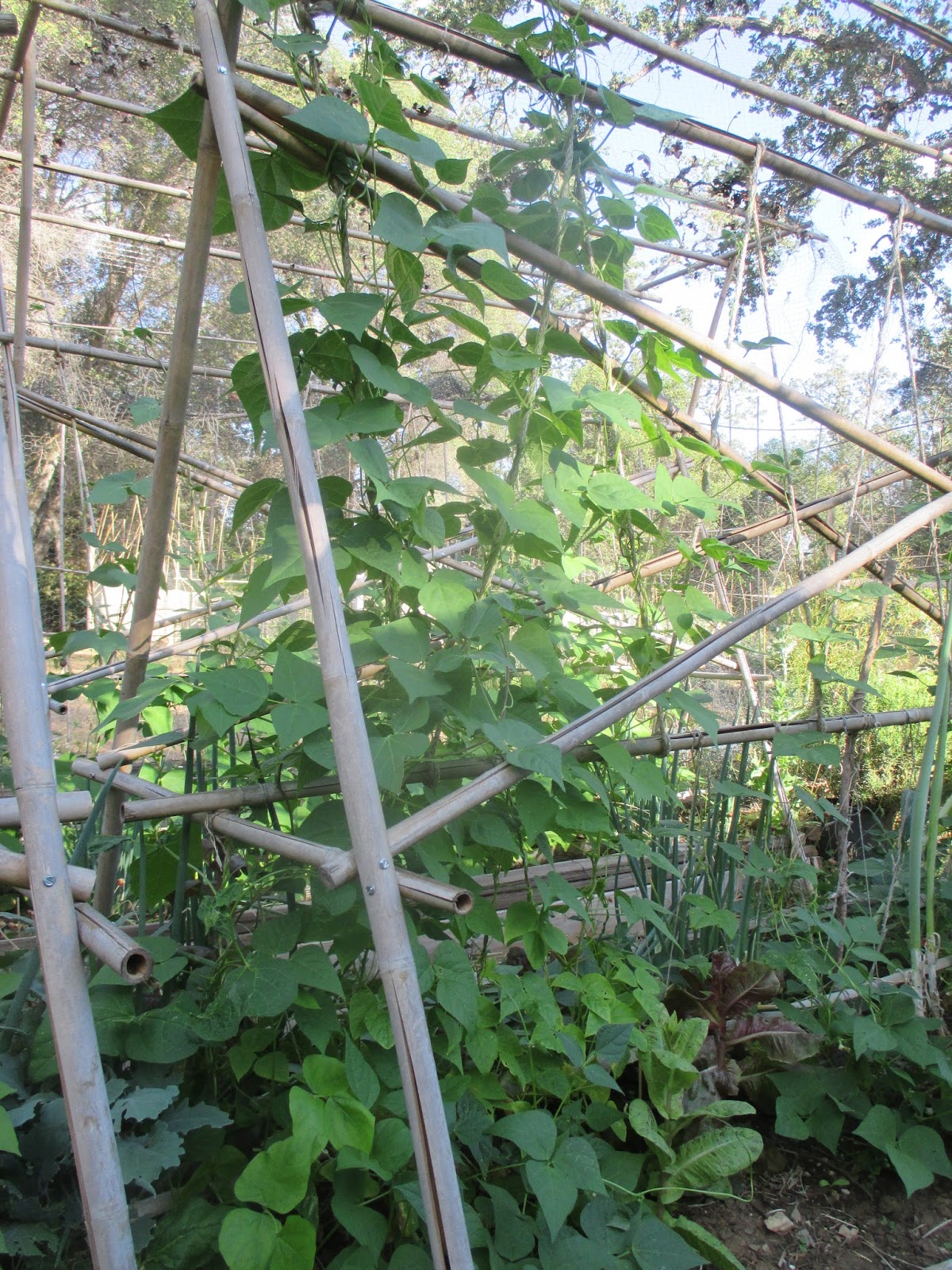
1 of 7 varieties of pole beans twining up 1 of 3 varieties of kale in the kitchen garden

to get as many varieties of fruit trees as possible into a small area i decided to grow the apples, pears, and figs as espaliers on free-standing trellises.  and to make the most of the space under the trellises i put in 3'x3' vegetable beds next to each tree.  each of those beds has been planted with a mix of vegetables, herbs, and flowers. 

borage planted next to one of the espaliered fig trees and the edge of a 3'x3' veggie bed to the right


this 3'x3' bed has strawberries, two varieties of kale, 3 varieties of lettuce, 2 varieties of pole beans, asparagus, sunflowers, sage and oregano


sunflower and scarlet runner bean sharing a trellis with 1 of 4 varieties of pear tree

to have a steady and reliable food supply it's important to have a good foundation of perennials to rely on if/when there are gaps or failures in the annual crops.  in addition to the fruit trees, we've got asparagus, several kinds of perennial herbs, artichokes, perennial onions, leeks, grapes,  jerusalem artichokes, perennial kale, tree collards, perennial arugula, strawberries, blackberries, and blueberries.  and i'm always on the lookout for other perennials that will work for us.

perennial onions (potato onions) and perennialized leeks with lettuces, greens, herbs and sunflowers

we're lucky to be in a climate where we can grow and eat out of the gardens all year.  and with the wide variety of plants we're growing there's always something ready for harvest, always something in flower for the birds and insects, and always something new that's ready to go in the ground.

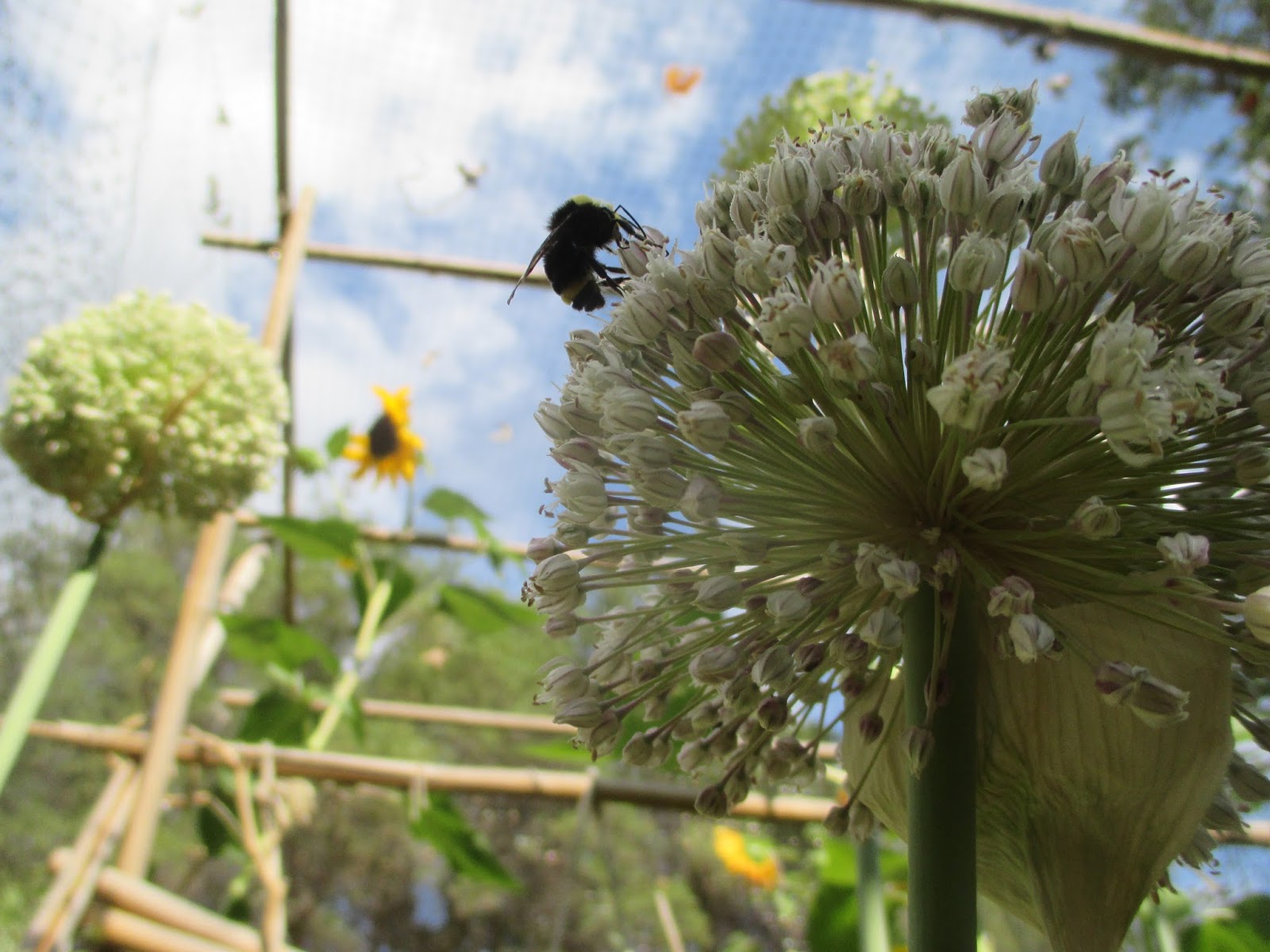
a pair of buckeyes enjoying the onions

it may be small but there is a lot of planning, researching, creative thinking, and physical work that goes into this little place.  it's me and a shovel and a wheel barrow.  it's demanding and challenging.  and it's the most rewarding and enjoyable life i can imagine.